







V naší jazykové škole si můžete prohlédnout a se slevou zakoupit produkty nakladatelství Lingea. Rádi Vám pomůžeme s výběrem vhodného slovníku pro Vás.
Recent Developments and Trends in the Global Cryptocurrency Landscape
Školní rok:
/
Datum narození studenta:
KP Adresa:
18-403 Lomza
E-mail:
DT
Mobil:
MP Typ kurzu:
- Vybrat -
Druh výuky:
- Vybrat -
Jazyk:
- Vybrat -
Úroveň:
IF
Den v týdnu:
- Vybrat -
Čas:
ES
Objednávám si závazně učební materiály (nejsou součástí kurzu!):
Ne
Souhlas se zpracováním osobních údajů:
Ano Souhlas se všeobecnými obchodními podmínkami:
Ne
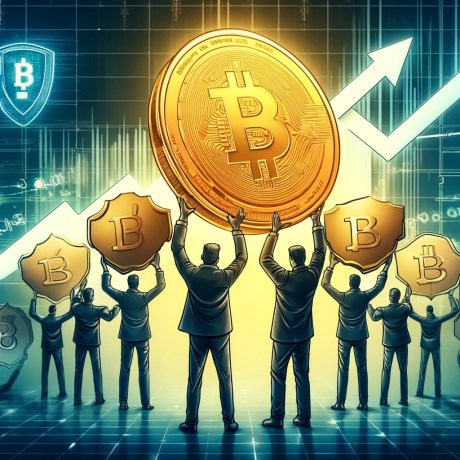
The cryptocurrency sector has experienced a whirlwind of developments in recent years, marked by regulatory shifts, technological advancements, and growing institutional adoption. As digital assets continue to reshape global finance, 2023 and early 2024 have brought both challenges and breakthroughs, offering a glimpse into the future of decentralized economies.
Regulatory Progress and Bitcoin ETF Approvals
One of the most significant milestones in 2024 was the U.S. Securities and Exchange Commission’s (SEC) approval of spot Bitcoin exchange-traded funds (ETFs). After a decade of rejections, the green light for products offered by firms like BlackRock and Fidelity marked a watershed moment for mainstream crypto adoption. These ETFs allow traditional investors to gain exposure to Bitcoin without directly holding the asset, bridging the gap between legacy finance and decentralized currencies. Similar approvals in Hong Kong and Australia further underscored Bitcoin’s evolving legitimacy.
However, regulatory clarity remains fragmented. While the European Union’s Markets in Crypto-Assets (MiCA) framework, enacted in 2024, established unified rules for crypto firms operating in the EU, the U.S. has taken a stricter approach. High-profile lawsuits against exchanges like Coinbase and Binance by the SEC reflect ongoing tensions over compliance and investor protection.
Ethereum’s Evolution and the Rise of Layer-2 Solutions
Ethereum solidified its position as the leading platform for decentralized applications (dApps) in 2023 following its successful transition to a proof-of-stake (PoS) consensus mechanism via "The Merge" in 2022. The subsequent Shanghai upgrade in April 2023 enabled stakers to withdraw locked ETH, boosting participation in network security. Ethereum’s energy efficiency improved by over 99%, addressing long-standing environmental concerns.
To tackle scalability, Layer-2 (L2) networks like Arbitrum and Optimism gained traction, reducing transaction costs and congestion on the Ethereum mainnet. These solutions processed over 60% of Ethereum transactions by late 2023, showcasing the growing demand for efficient blockchain infrastructure. Meanwhile, competitors such as Solana and Cardano continued to innovate, emphasizing speed and low fees.
Central Bank Digital Currencies (CBDCs) Go Global
Central banks worldwide accelerated their exploration of CBDCs, with over 130 countries now researching or piloting sovereign digital currencies. China expanded trials of its digital yuan, while the European Central Bank advanced its digital euro project into a preparation phase in late 2023. Emerging economies like Nigeria and the Bahamas have already launched their CBDCs, aiming to enhance financial inclusion and payment efficiency.
Critics, however, warn of potential privacy risks and government overreach. Public skepticism has slowed progress in some regions, such as the U.S., where a digital dollar remains contentious.
Institutional Adoption and Real-World Use Cases
Traditional financial institutions deepened their crypto involvement in 2023. Banking giants like JPMorgan and HSBC integrated blockchain for cross-border settlements, leveraging platforms like Polygon and Avalanche. Visa expanded its stablecoin settlement capabilities, while PayPal launched its own USD-backed stablecoin, PYUSD, signaling a push toward crypto-powered payment systems.
Asset tokenization also emerged as a key trend, with firms like Siemens and Goldman Sachs issuing digital bonds on public blockchains. Real-world assets (RWAs), including real estate and commodities, are increasingly being represented as tokens, unlocking liquidity and fractional ownership opportunities.
Bitcoin Ordinals and the NFT Resurgence
Bitcoin, often criticized for its limited utility beyond being a "digital gold," found new purpose with the rise of Ordinals in 2023. If you have any inquiries concerning where and the best ways to utilize altcoin vs bitcoin charts, you can call us at the web site. These Bitcoin-based non-fungible tokens (NFTs), which store data directly on the blockchain, sparked debates over network congestion but also demonstrated Bitcoin’s versatility. By early 2024, over 50 million Ordinals had been minted, driving unprecedented demand for Bitcoin block space.
Ethereum’s NFT ecosystem, meanwhile, rebounded from the 2022 downturn, with platforms like Blur and OpenSea v2 introducing enhanced creator tools and royalty enforcement mechanisms.
Challenges: Security, Scams, and Market Volatility
Despite progress, the crypto industry faced setbacks. 2023 saw over $2 billion lost to hacks and scams, with exploits targeting bridges and DeFi protocols. The collapse of TerraUSD in 2022 continued to reverberate, prompting stricter stablecoin regulations under MiCA and other frameworks.
Market volatility persisted, with Bitcoin swinging from $16,000 in late 2022 to a record $73,000 in March 2024, driven by ETF inflows and macroeconomic factors. Altcoins mirrored these fluctuations, highlighting the asset class’s speculative nature.
Sustainability Efforts and Green Mining
Environmental concerns remain central to crypto’s evolution. Following Ethereum’s shift to PoS, attention turned to Bitcoin’s energy consumption. Initiatives like the Crypto Climate Accord gained momentum, with mining companies increasingly adopting renewable energy. El Salvador, for instance, launched a geothermal Bitcoin mining facility powered by volcanic energy, aligning with its pro-crypto policies.
Looking Ahead
The cryptocurrency landscape is poised for further transformation. Regulatory harmonization, scalable infrastructure, and real-world integration will dictate its trajectory. As decentralized finance (DeFi) matures and artificial intelligence intersects with blockchain tech, the next era of innovation could redefine money, ownership, and trust on a global scale.
While risks endure, the convergence of institutional interest, technological breakthroughs, and regulatory frameworks suggests cryptocurrencies are here to stay—not as a niche asset, but as a cornerstone of 21st-century finance.